
)
In India, A demat account is essential for investors because it allows investors to store shares and securities (stocks, mutual funds, bonds, etc.); therefore, you do not need to keep a physical certificate of shares.
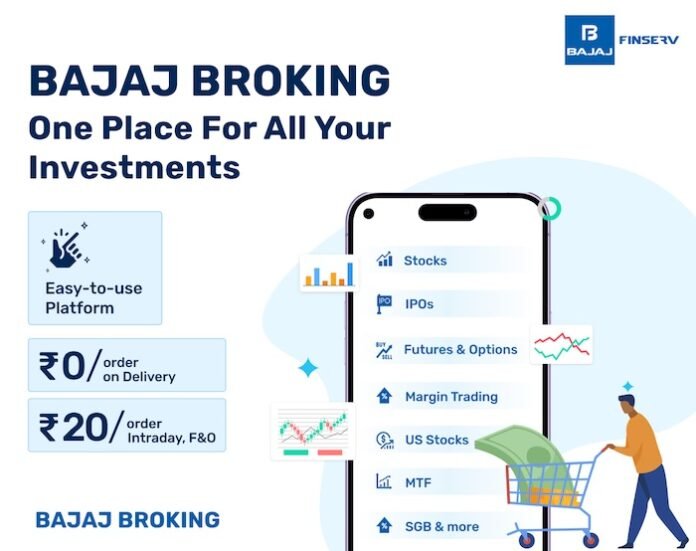
Understanding a demat account helps you navigate the share market investment in India. A demat account helps investors to keep track of all the shares, funds, and bonds in a single place. Multiple reliable sources in India provide a demat account facility; Bajaj Broking is one of them.
Here are 7 Key Facts You should know about a Demat Account in India. Let’s get started.
A demat account acts as a digital repository for investments
A demat account in India is an electronically managed storage system that can hold shares, bonds, securities, and mutual funds. Also, this provides a facility to process the bonds, shares electronically without physical processing.
With this facility, investors need not worry about the risks that are associated with physical share certificates, like theft, loss, or damage due to any reason. This is the right way to manage investment efficiently.
There are multiple demat account providers in India, and you can choose from them. Bajaj Broking is one of the reliable source that give investors the option to manage their investments easily.
It is mandatory for stock market trading
A demat account is necessary in India to invest in equities. If you want to participate in an Initial Public Offering (IPO) or you want to purchase shares of a listed company in India, you need to have a Demat account. This helps you to do all the transactions electronically, which also ensures security and ease.
Without having a demat account, you will not be able to do any transactions in equities, mutual funds, or IPOs.
Also Read: How to transfer shares from one demat account to another?
Demat account opening process
There is an easy process to open a demat account to start investing in the market.
- Choose DP (Depository Participant) – Financial institutions, Banks, and Brokerage firms provide the facility to open a demat account in India.
- KYC (Know Your Customer) – Banks, Financial institutions, and brokerage firms ask for KYC to open a demat account. You can submit any document, like a PAN card, Aadhaar card, and bank details, to complete the KYC.
- Verification – The Bank, Brokerage firms, and financial institutions will arrange a quick verification to verify documents and process the demat opening.
- Demat Account Activation – After verifying the KYC, the Bank will activate your demat account and provide the BO ID.
Charges associated with demat account – quick info
Some providers in India offer zero demat account opening charges, but other charges may apply.
- Annual Maintenance Charges – Demat account provider charges yearly fees to maintain the demat account in India
- Transaction Fees – The Demat account provider charges a minimal amount while performing buying and selling transactions
- Dematerialization/Rematerialization Charges – This charge is for converting the physical share into digital and digital to physical.
Also Read: All you need to know about demat and trading account charges
Demat account and trading account
A demat account and a trading account are for distinct purposes; both are required to operate the online stock transaction.
A demat account holds securities in electronic form, while a trading account enables investors to buy and sell shares, securities on the stock exchange.
A demat account can hold more than just stocks
In addition to equities, a Demat account allows investment in:
- Government bonds
- Mutual funds
- Exchange-Traded Funds (ETFs)
- Sovereign Gold Bonds (SGBs)
- Corporate bonds
This makes it a comprehensive solution for managing diverse financial assets.
Also Read: Planning to open a demat account? Top things you should know
Right demat account provider matters
If you are interested in opening a demat account in India, you should consider the following factors.
- Charges – Compare and understand the charges, such as AMC, buying & selling charges across the demat account providers
- Ease of Use – Do your research and compare the interface, choose the one that is easy for you to operate
- Customer Support – Check for customer support if you need any kind of help from the demat account provider
- Additional Features – Look for additional features to make your experience convenient. Such as research reports, trading tools, other features, etc.
Conclusion
If you want to invest in the Indian stock market, then a demat account is a requirement to start investing in the stock market.
Investors need to understand the features and benefits of a demat account. Associated charges and regulations to invest in the stock market with ease.
As an investor, you need to choose the right demat account provider as per your requirements, so that you can continue your investment without interruption.